In this article, we will elaborate on the types of camera angles used in cinema and their meaning in relation to cinematic visual language. As a student of film and film practitioner, I highly recommend Gustavo Mercado’s book, The Filmmaker’s Eye: Learning (and Breaking) the Rules of Cinematic Composition, which provides a concise introduction to camera angles and shot sizes in the context of visual language — a few examples from Mercado’s book are included in this article.
There are six basic angles in films: the bird’s-eye-view, high-level, eye-level, low-level, worm’s-eye-view and canted (or Dutch) angle. Each angle has a specific purpose and is interpreted differently according to the elements of mise-en-scène. However, the most important function of the camera angle is — if used appropriately — evoking a specific range of emotions to the audience depending on the themes and characters of the story.
1. Bird’s-eye-view shot
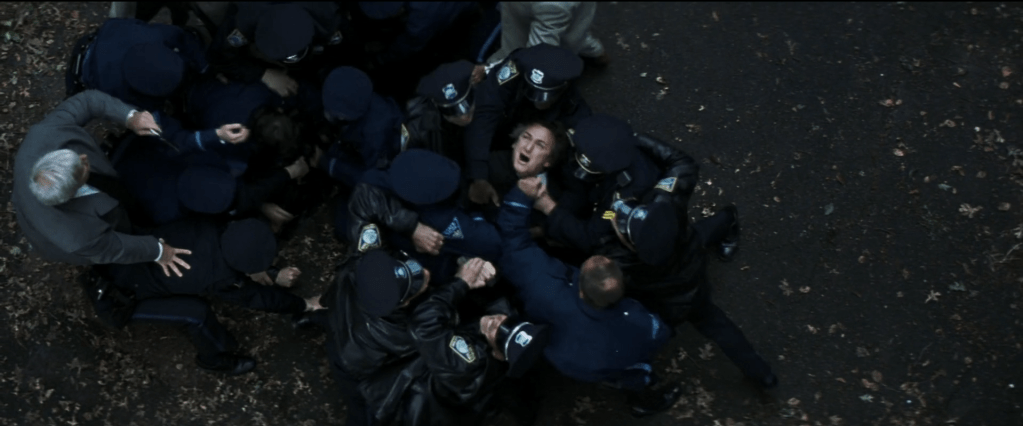
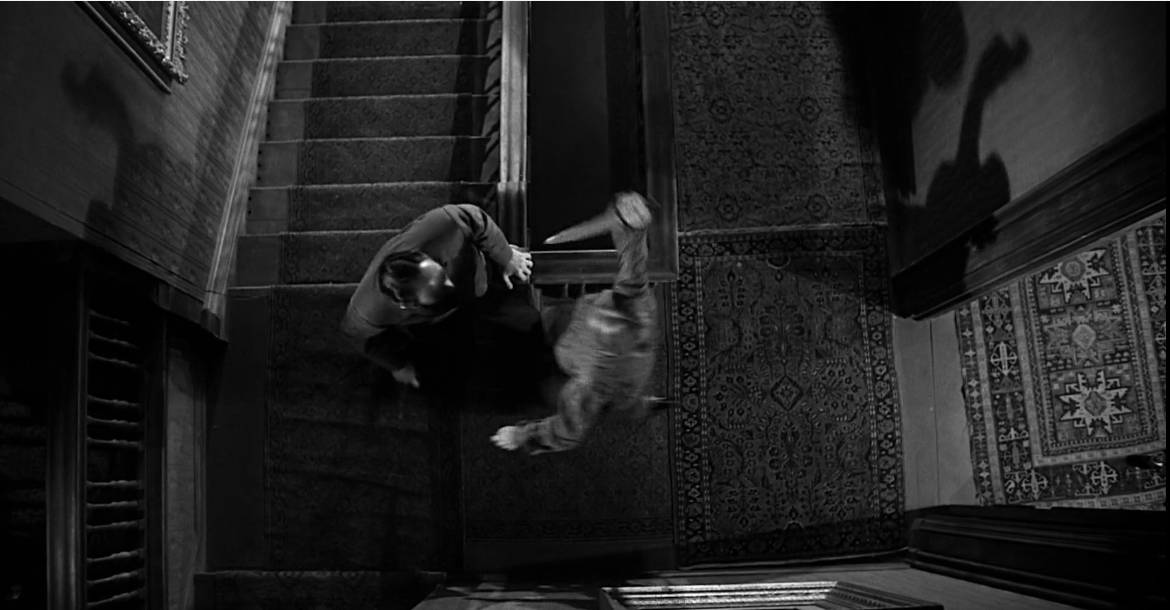
The bird’s-eye-view is considered to be the most confusing and disorienting angle since it requires the shooting of a scene from directly overhead. Because of the fact that people in real life seldom view events from this perspective, the subject, which is photographed in such shots, might seem unrecognisable, with the whole shot resembling an abstract image. This angle is most often used for establishing shots at the beginning of a scene as it is really helpful to set the tone and mood of the location in which the story takes place. The bird’s-eye-view shot can also be used for practical reasons to benefit the story, such as in Alfred Hitchcock’s Psycho (1960) (see below). The shots that are photographed in this angle could acquire a symbolic meaning and serve a purpose according to the film’s story and mise-en-scène. For example, in Clint Eastwood’s Mystic River (2003), when the father of the missing girl, Jimmy (played by Sean Penn), discovers that she had been murdered, he starts yelling God’s name in desperation. The sequence ends with a sequence that starts with a bird’s-eye-view shot of the father in agony while being restrained by police officers, then fading to the dead body of his daughter, followed by the camera moving upwards framing the sky, as if God is watching passively from above (see below).
Mystic River (2003), directed by Clint Eastwood. The bird’s-eye-view shot and the motion of the camera outwards in this scene evoke the sense that Jimmy’s pain echoes across the sky. With the sequence ending at a shot of the wide sky, we wonder if God is there, if he listens, and if will answer’s Jimmy’s pleas.
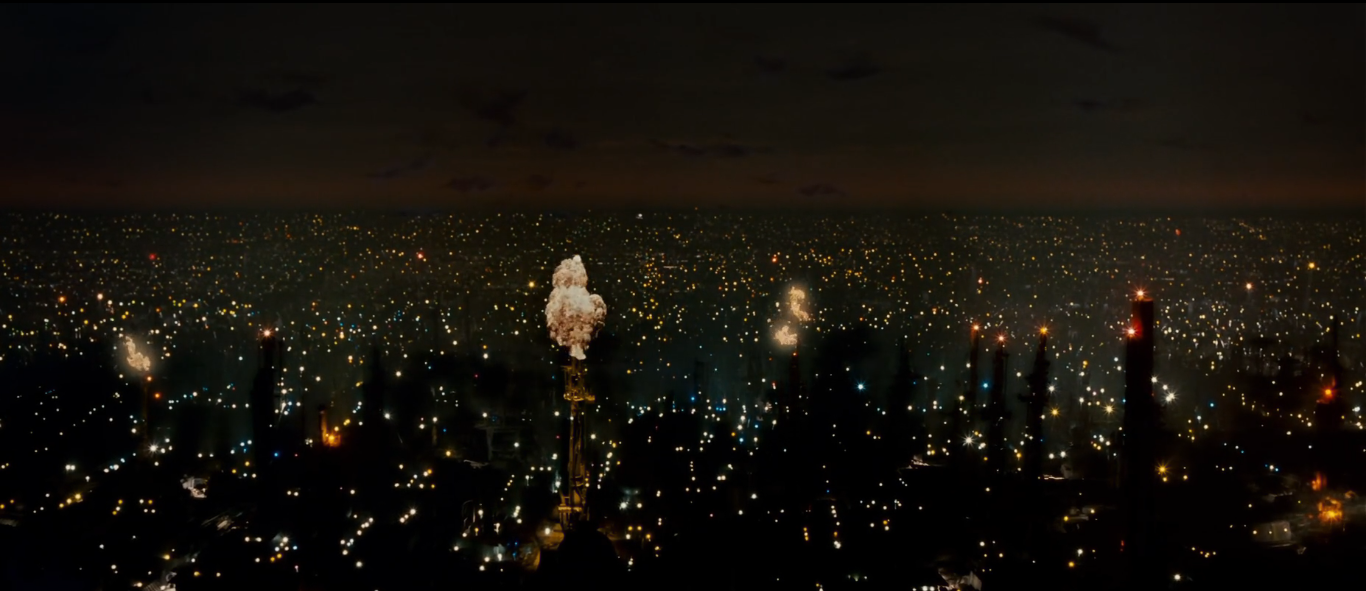
Blade Runner (1982), directed by Ridley Scott. The establishing shots at the beginning of the film’s scenes set the environment of the story perfectly. The orange and brown colours, the chimneys that spit out fire, and the appearance of humidity simulate a filthy and unhealthy environment that instantly transfers the viewer to a futuristic dystopian city.
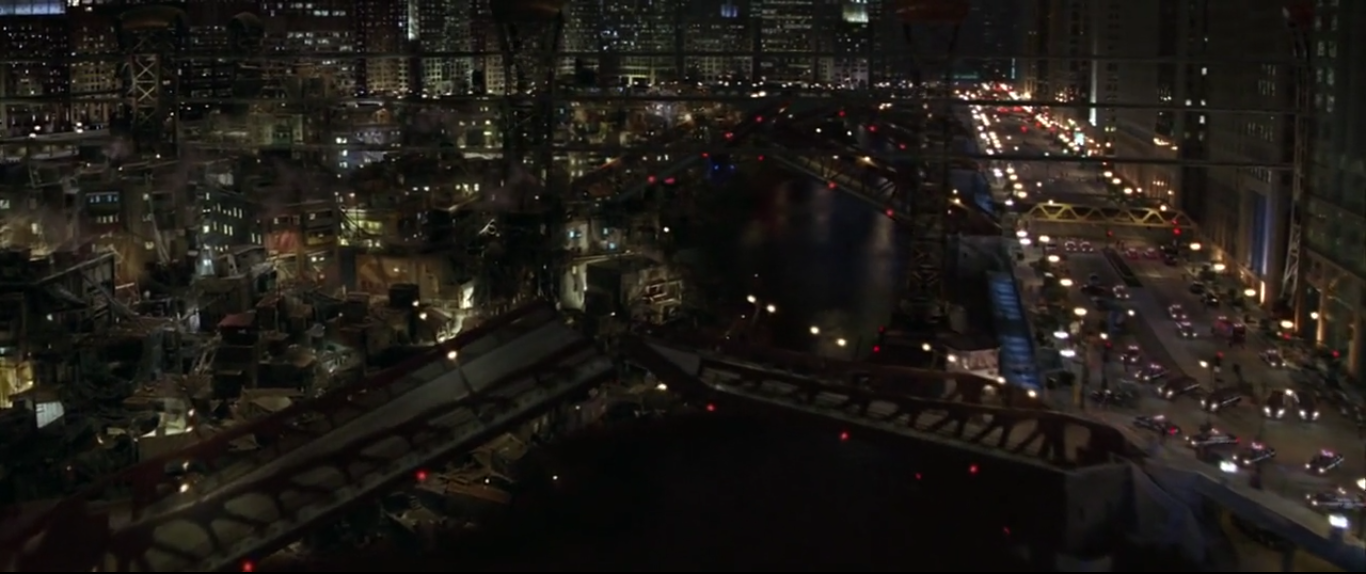
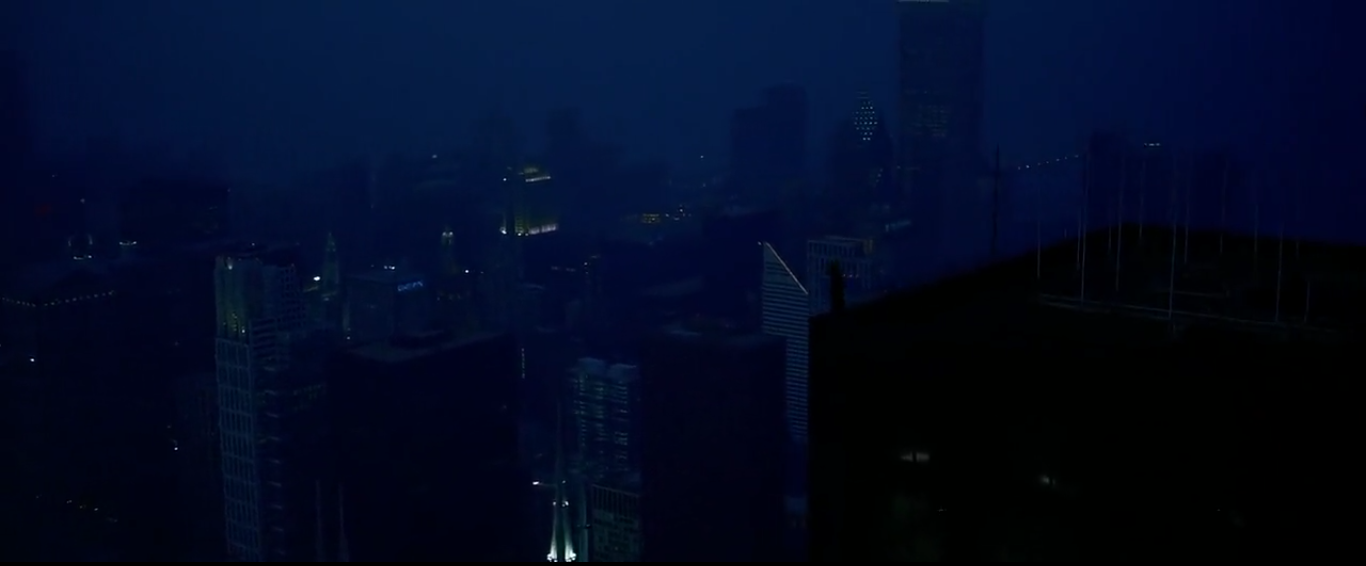
Batman Begins (2005) (above) and The Dark Knight (2008) (below), directed by Christopher Nolan. The use of establishing shots in The Dark Knight Trilogy is quite extensive. Through the use of establishing shots taken of various existing cities of USA (Chicago, New York, Pittsburgh), the director depicts a modern Gotham City that is authentic, and thus convincing to the audience. The faceless urban buildings and the use of a cool colour palette create a very cold, distant and miserable environment. The establishing shots of skyscrapers, flickering lights, and wealthy modern buildings are contradictory to other shots of urban life in the city which represent the lower class, like factories, buildings with smokey chimneys in grey neighbourhoods. The films revolve around the theme of corruption within police force and among the wealthy; this theme is masterfully underlined by the antithesis that exists between different areas of the city.
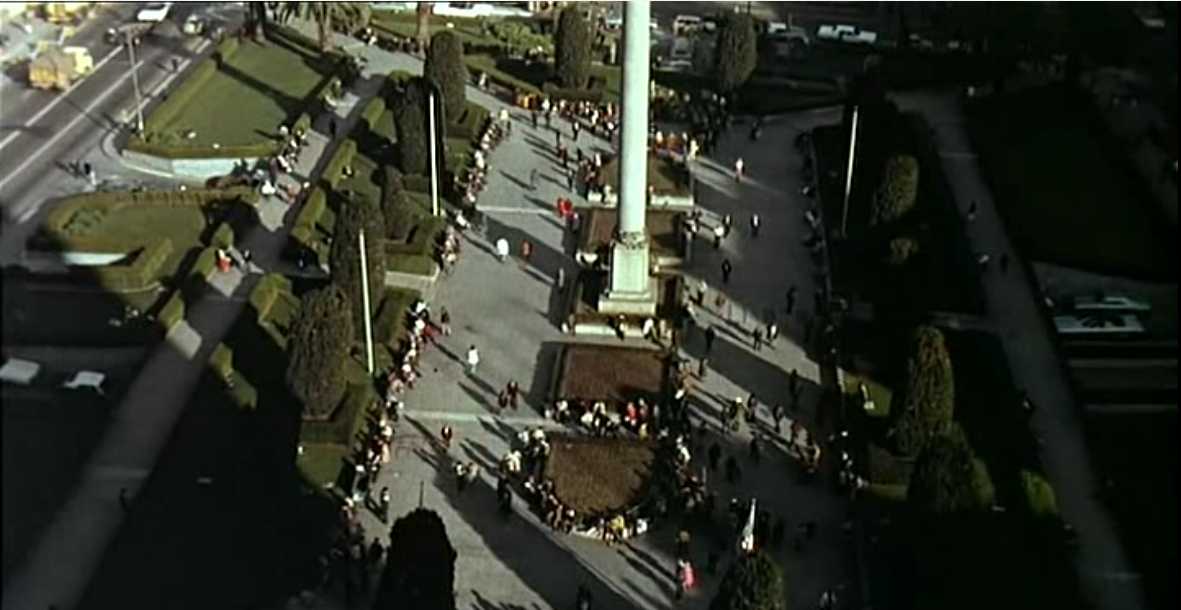
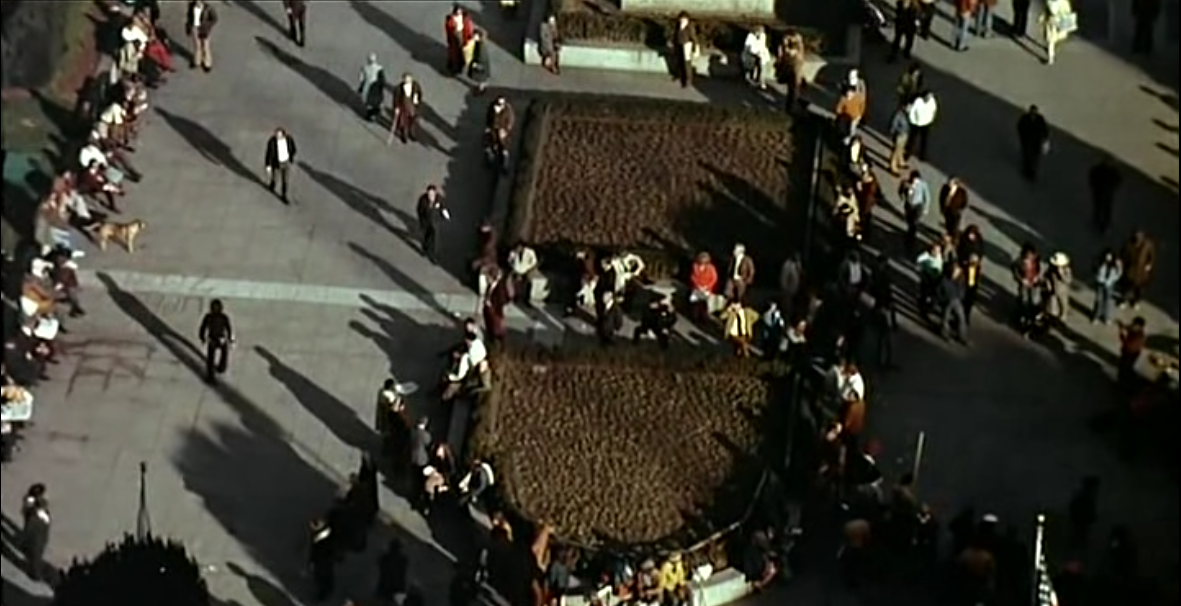
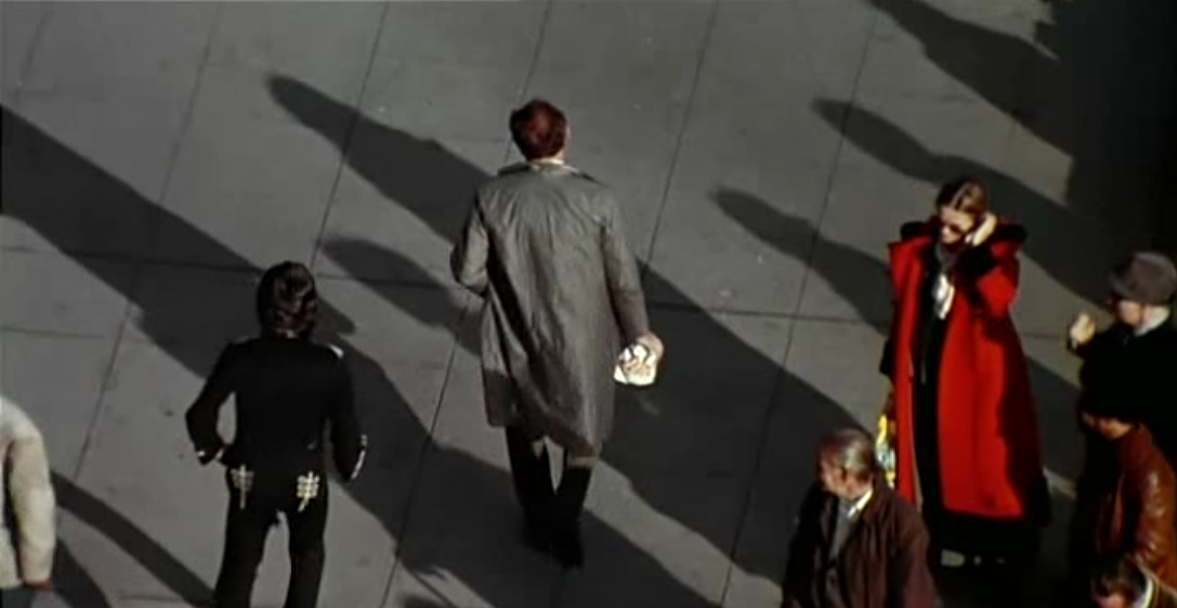
The Conversation (1974), directed by Francis Ford Coppola. The film tells the story of a surveillance expert and his moral dilemma when discovers that his recordings reveal a potential murder. The opening shot of the film is a bird’s-eye-view shot of a crowded square. As the shot proceeds, the camera gets closer to the people, revealing the main character of the film, played by Gene Hackman. The opening shot conveys the feeling of surveillance and invasion of privacy, immediately placing the viewer within the story.
Psycho (1960), directed by Alfred Hitchcock. The use of the bird’s-eye-view shot while Mrs. Bates kills Detective Arbogast (played by Martin Balsam) prevents the audience from identifying her true identity. The shot also makes us feel that we are passive observers of the murder, making the character of Det. Arbogast even more helpless and weak.
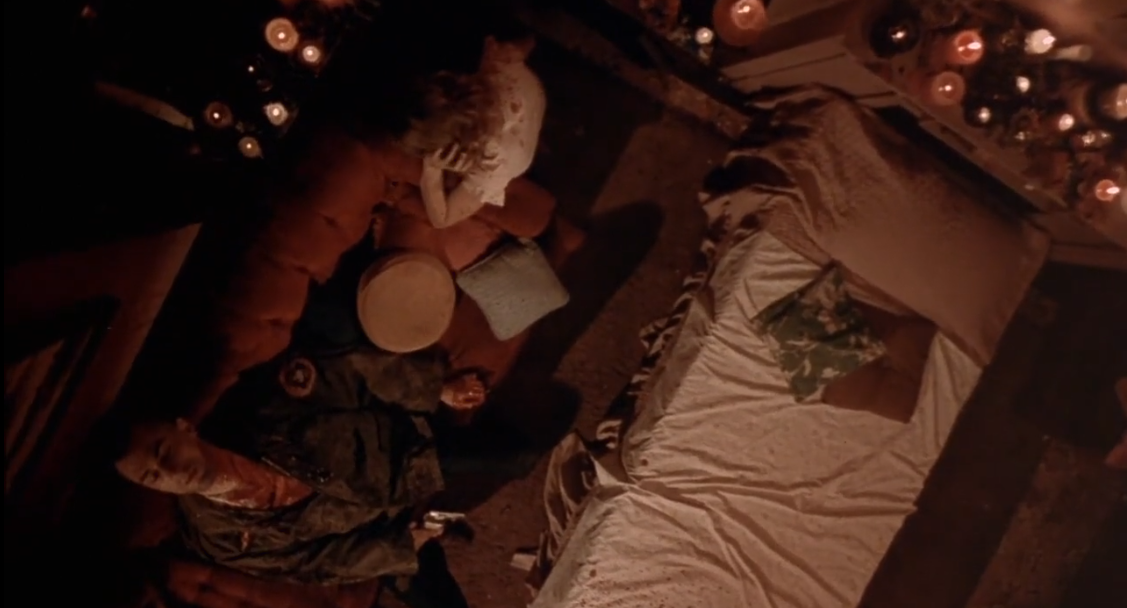
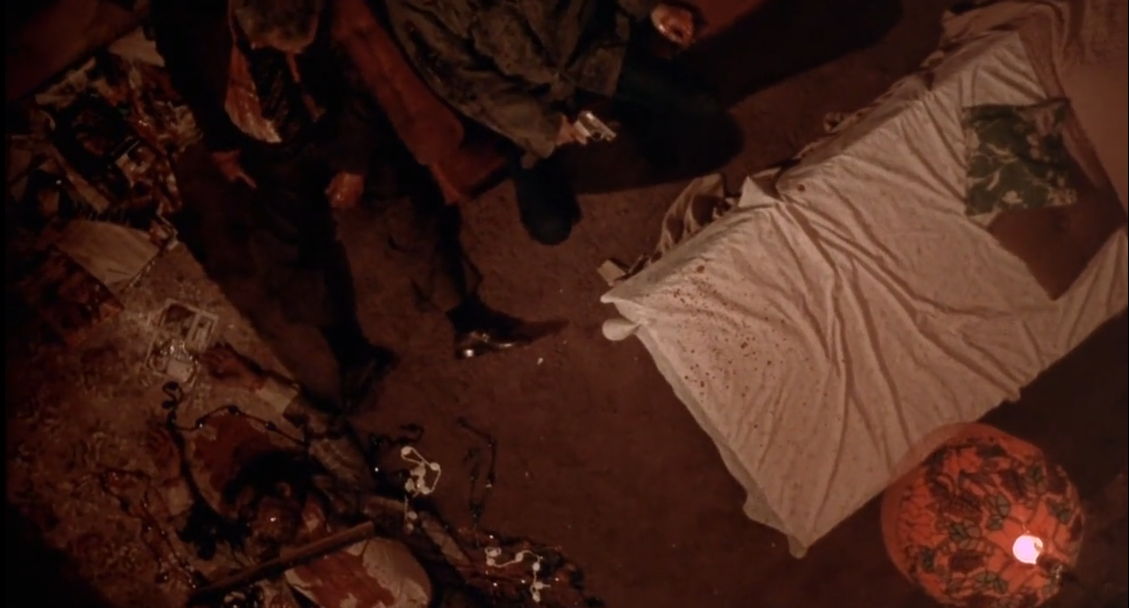
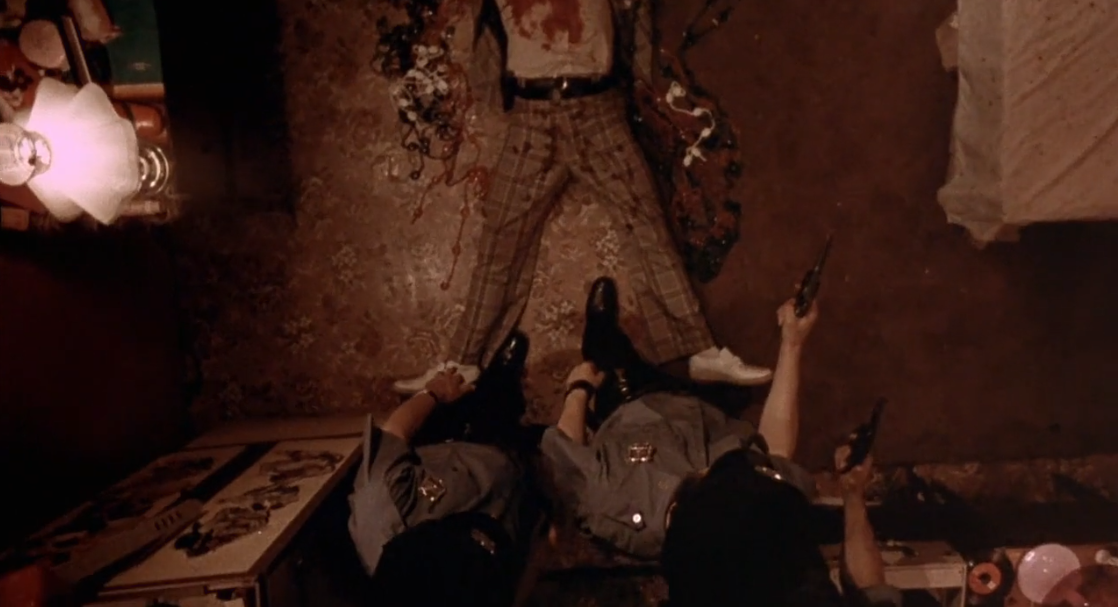
Taxi Driver (1976), directed by Martin Scorsese. Travis (played by Robert De Niro) invades the prostitutes’ accommodation and kills everybody to save a young prostitute named Iris (played by Jodie Foster). After the massacre, he sits on the sofa and stays there, while Iris is sobbing at the corner of the room. Finally, the police force enters. We observe the aftermath of the massacre from above. The high angle, the slow moving camera, and the stillness of the police officers makes the moment more dramatic, allowing us to fully grasp the brutality and savagery of his act. The cries of Iris echoing in the silent room create a shocking experience. Time seems to stop; the viewers become witnesses of human barbarity, and there is no escape.
2. High-angle shot
In a high-angle shot, the camera is placed above the eye-level of the character, resulting in a framing that has the audience looking down on a subject. High-angle shots are used to emphasise the subject’s powerlessness. Since the camera is placed from above, it decreases the size of the subject, making it look small, and thus helpless. High-angle shots can also be used to signal the potential murder or injury of a character, underlining their vulnerability and making them more sympathetic to the audience. The high-angle shots can also convey feelings of entrapment, suffocation, oppression, and panic. In addition, this angle can be used for practical purposes, for example when an incident is happening outdoors and a character is viewing it from their window or balcony.
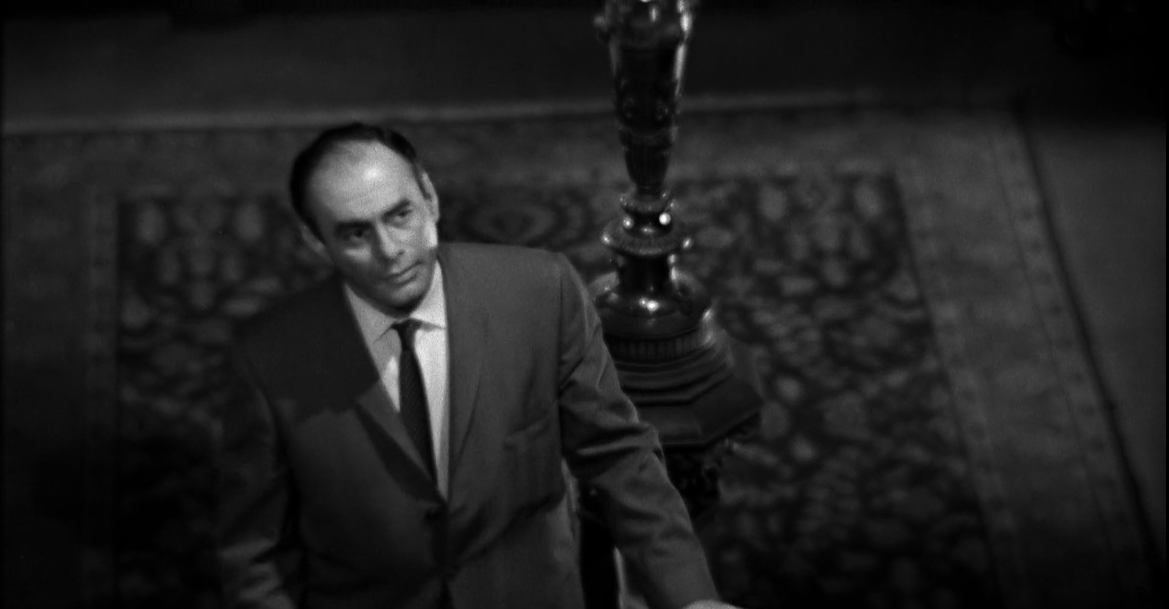
Psycho (1960), directed by Alfred Hitchcock. The high-angle shot of Detective Arbogast (played by Martin Balsam) moments before his violent murder evokes his vulnerability and state of danger he is in. The shot ‘predicts’ that something harmful will occur to the character.
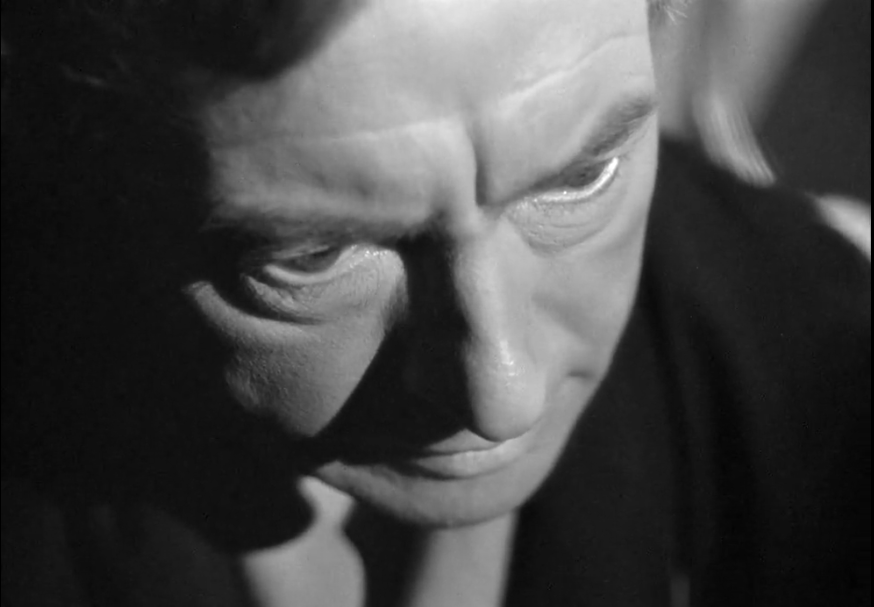
Notorious (1946), directed by Alfred Hitchcock. The high-angle shot of Alexander Sebastian (played by Claude Rains) while he informs his mother of his shocking discovery that his newlywed wife, Alicia (played by Ingrid Bergman), is a spy working against him, evokes panic and suffocation.
3. Eye-level shot
In eye-level shots, the camera is placed at a height which matches the subject’s eyes. This angle is used in routine expository scenes that lack drama and intensity. This angle does not evoke any particular feelings to the audience, but it somehow makes the character equal to the viewer. Traditionally, filmmakers avoid shooting in extreme angles as such angles might be confusing to the audience. Usually, the directors photograph characters in eye-level shots as this type of shot is comfortable to the viewer’s eyes in the sense that this is the way an actual observer might view a scene. Visually, this is the clearest way to view an object because it lacks any embellishments and exaggerations. However, there have been exceptions to these rules throughout film history.
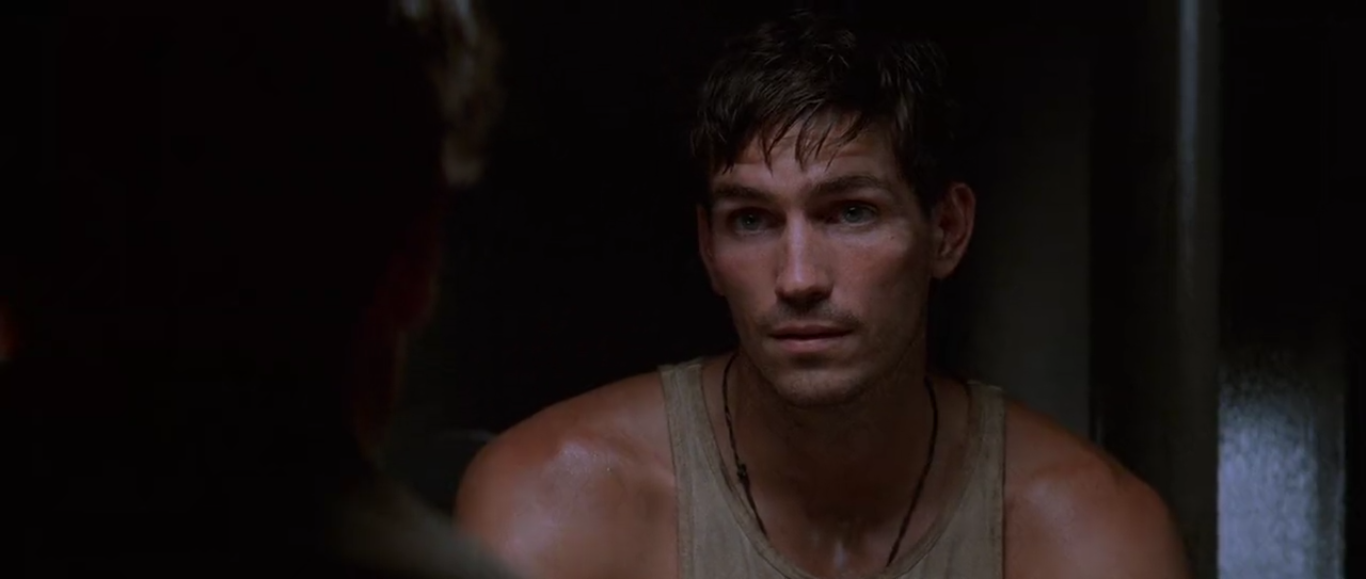
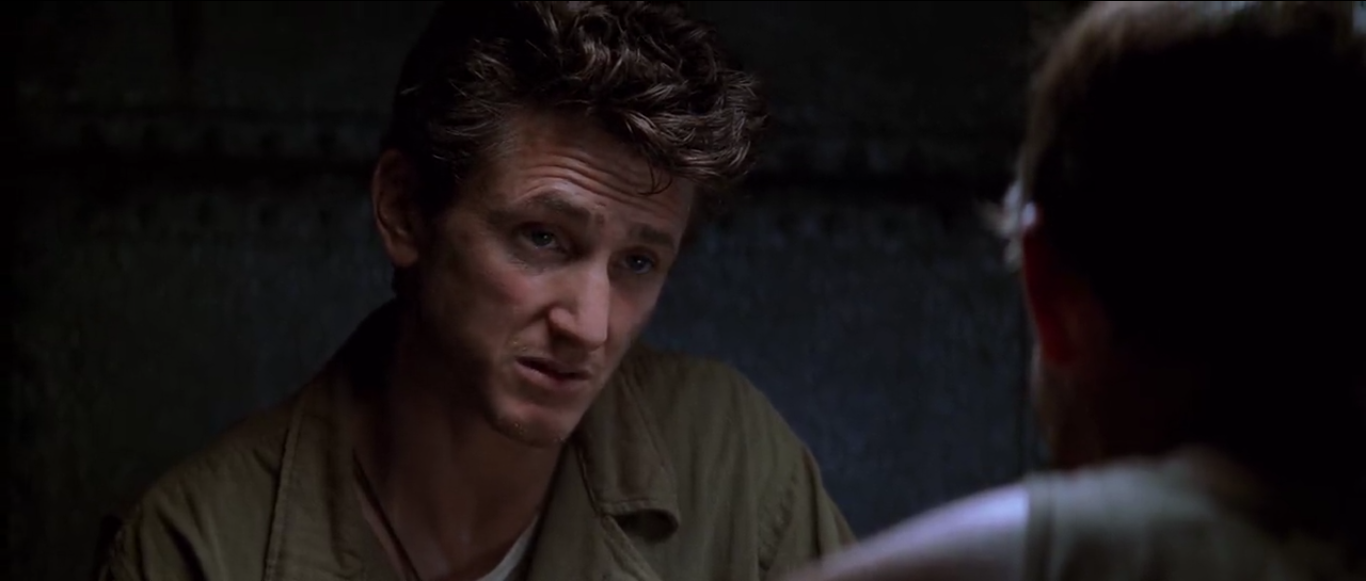
The Thin Red Line (1998), directed by Terrence Malick. Eye-level shots are used during scenes that bear a lot of dialogue and exposition, such as in this interrogation scene with Pvt. Witt (played by Jim Caviezel) and 1st Sgt. Welsh (played by Sean Penn).
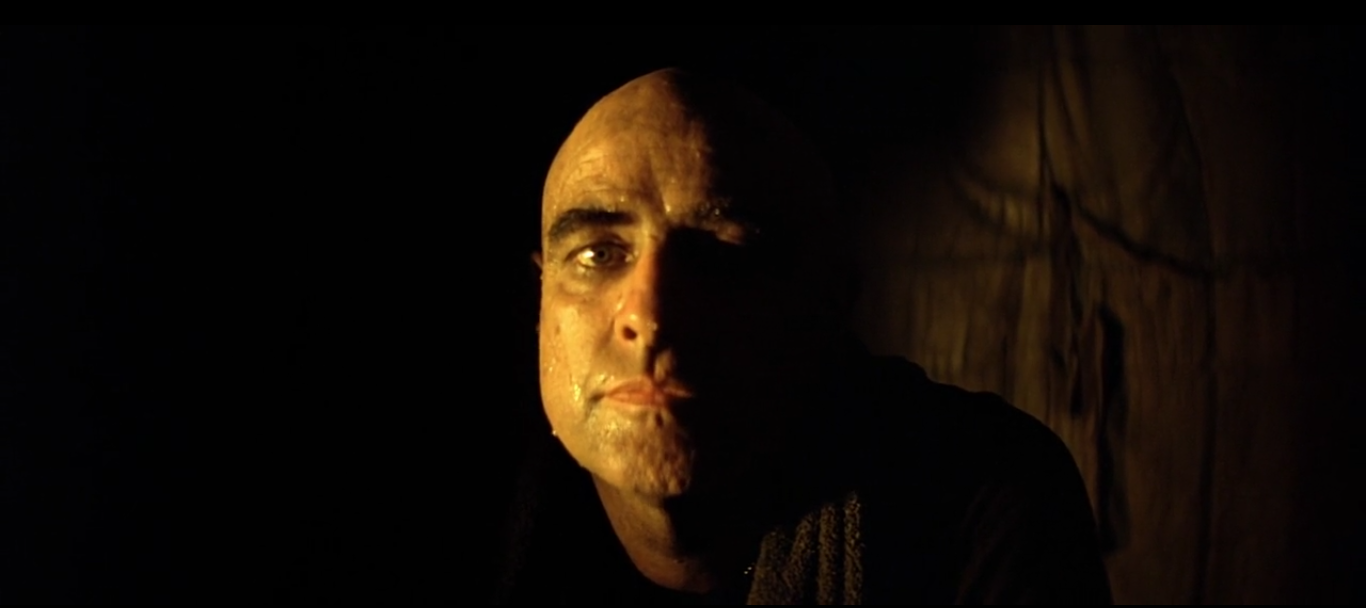
Apocalypse Now (1979), directed by Francis Ford Coppola. The story follows Captain Willard (played by Martin Sheen) travelling from South Vietnam to Cambodia to assassinate Colonel Kurtz after Kurtz was declared mentally unfit and his methods unsound by the US Army. Throughout the film, Kurtz is called insane by some, and genius by others. He lives in the jungles in a neutral area of Cambodia, commanding his own troops and being treated as a demi-god. The audience is introduced to Kurtz (played by Marlon Brando) in an eye-level shot, which is Willard’s perspective. In one of the most powerful shots in the history of cinema, Brando’s face is kept in the dark for the most of the scene while he is questioning Willard about his secret mission. By the end of the scene, Brando’s face becomes fully visible when he calmly belittles Willard and his mission. The height of the camera, the hard lighting, and the penetrating gaze of Brando create an unsettling and disturbing mood; the shot echoes Caravaggio’s chiaroscuro paintings. The height of the camera allows Brando’s eyes to pierce through Willard’s and our soul. The character becomes intimidating and the hard lighting adds to the drama and intensity of the scene.
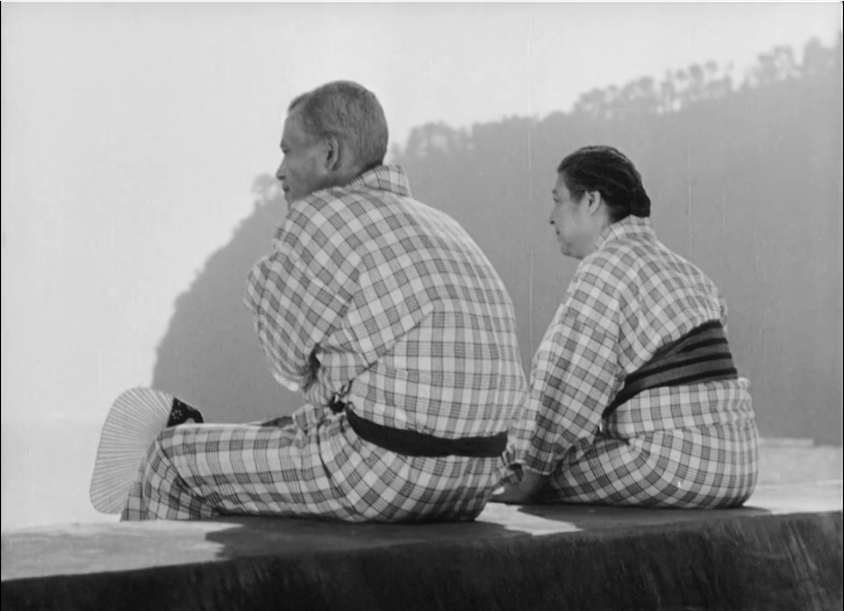
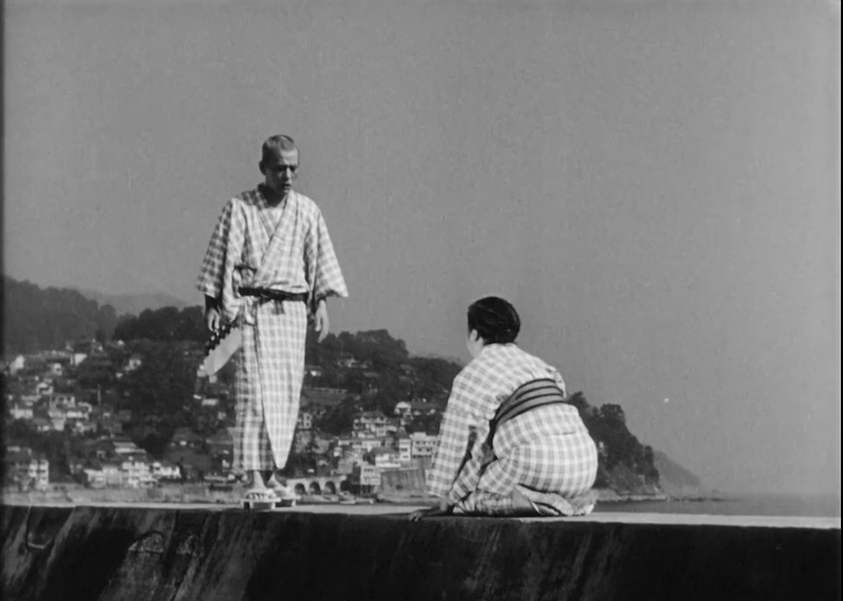
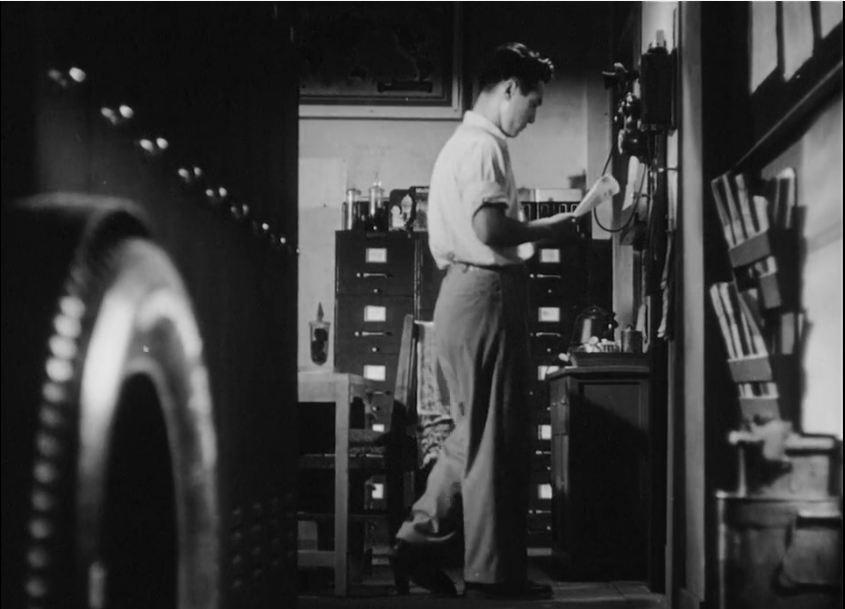
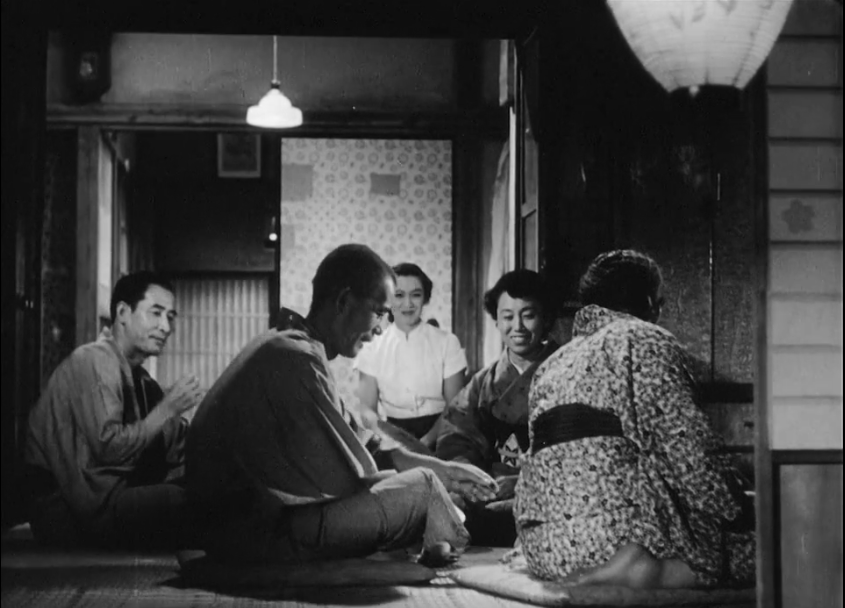
Tokyo Story (1953), directed by Yasujiro Ozu. The film tells the story of an old couple that visits their children and grandchildren in Tokyo. Ozu had the habit of placing the camera just a few feet off the ground to photograph his actors while they were sitting down. He kept the same height of the camera for most of his shots. Ozu believed that eye-level shots allow the viewers to feel closer to the characters and sympathise with them.
4. Low-angle shot
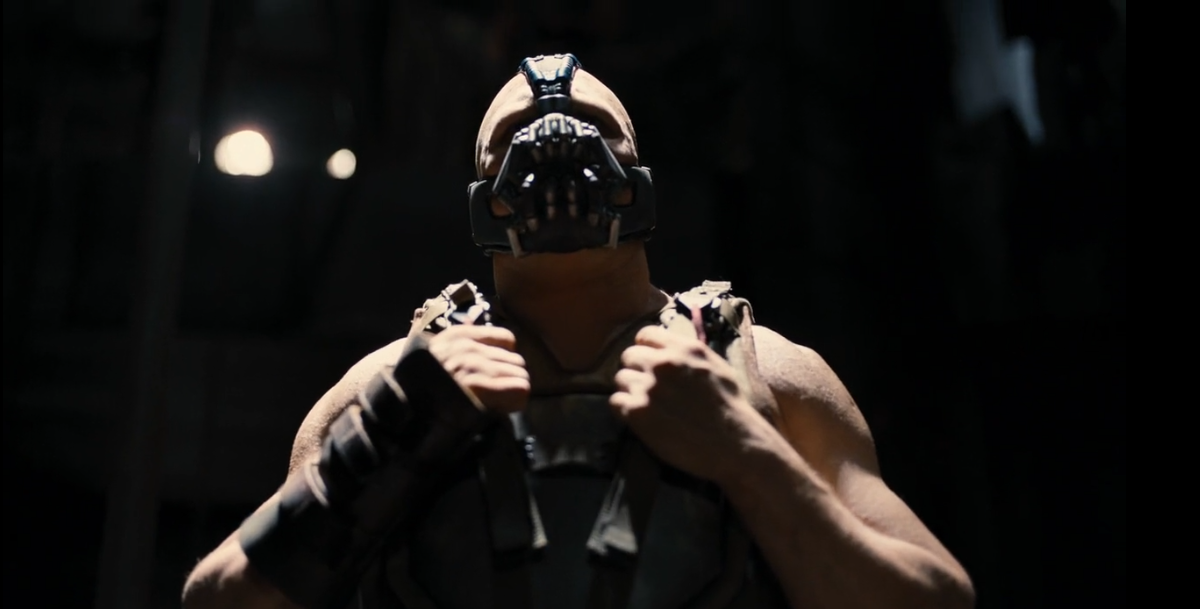
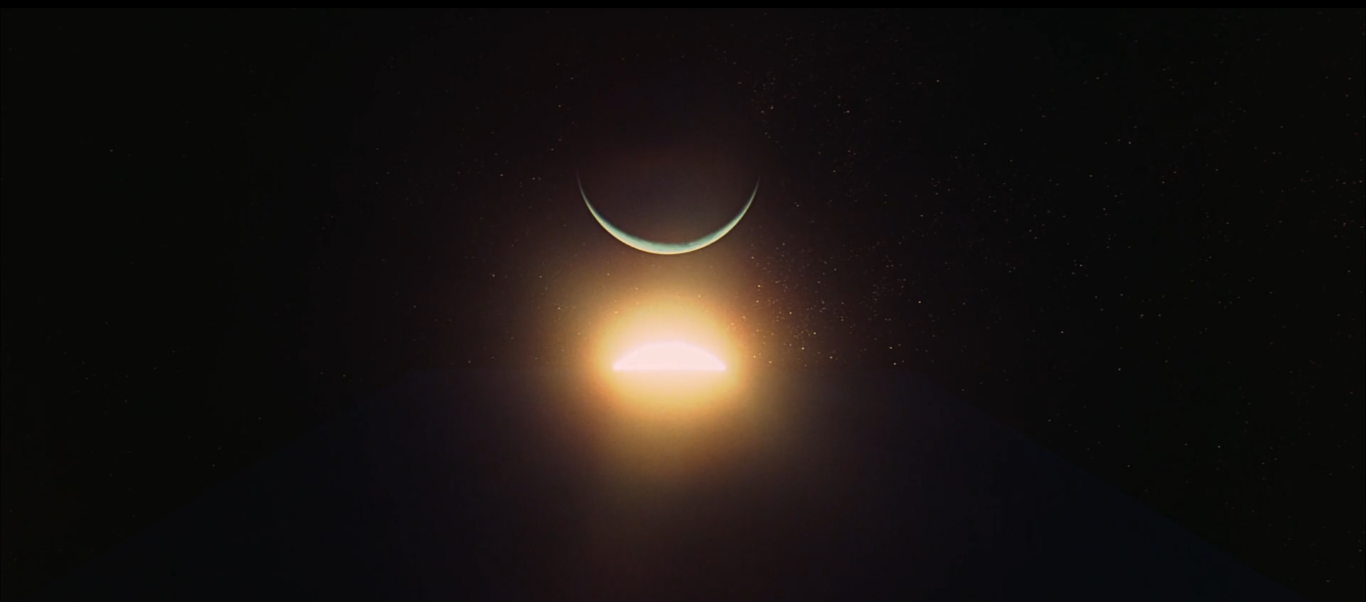
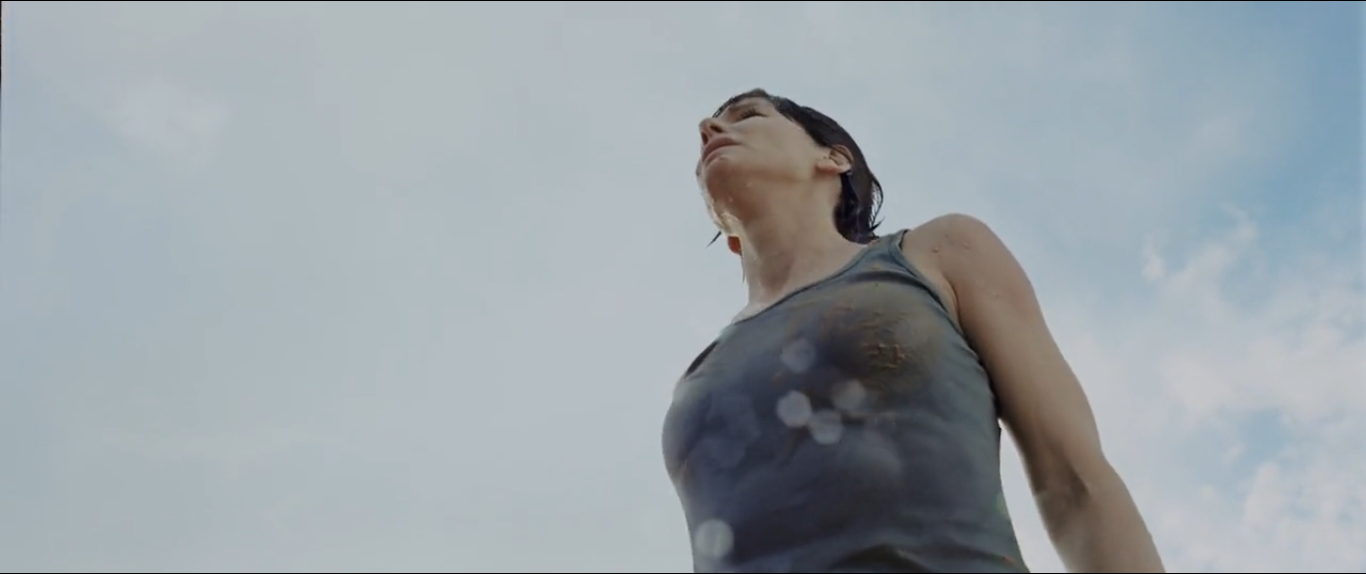
In a low-angle shot, the filmmaker places the camera below eye level and lets the audience look up at a subject. Low angle shots convey the subject’s power, confidence and control; because of the low angle, the size of the character is exaggerated and the subject looks bigger than normal. Due to the dominance of the subject’s figure in the frame, the subject inspires fear, respect, and awe. Usually the villains of films are shot in low angle shots to underline their overwhelming supremacy.
The Dark Knight Rises (2012), directed by Christopher Nolan. Low-angle shots are very common in superhero films especially when photographing villains. In this case, the character Bane (played by Tom Hardy) is framed in a low-angle shot which evokes fear, awe, and emphasises the character’s strength and superiority.
2001 Space Odyssey (1968), directed by Stanley Kubrick. The monolith is photographed in low-angle shots, inducing feelings of awe and underlining the monolith’s importance to humanity’s course of history and evolution.
Gravity (2013), directed by Alfonso Cuarón. At the end of the film, where Astronaut Ryan Stone (played by Sandra Bullock) has finally returned to Earth after enduring a traumatic experience in space, she is framed in an extreme low-angle shot. The low-angle shot emphasises the character’s strong will to survive, evoking emotions of gratification to the viewers.
5. Worm’s-eye-view shot
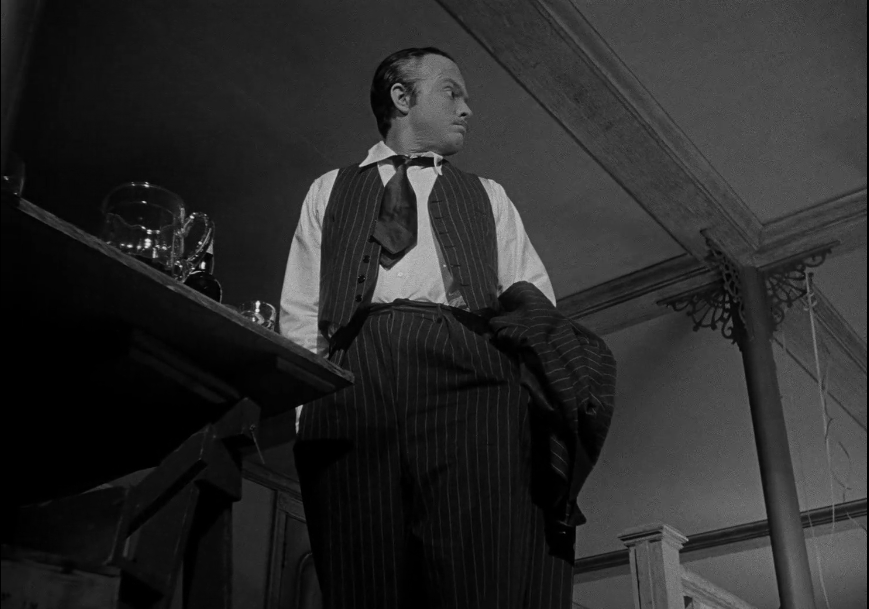
In worm’s-eye-view shots, the camera is placed on ground level and allows the audience to view a scene from a very low perspective. From this point of view, the size of a subject is exaggerated, looking enormous to the audience, and thus evoking feelings of power and control. This angle also allows the viewer to observe the environment in which the scene takes place. The worm’s-eye-view is not that common in films, and is mainly used as a subjective shot of a character that lies on the ground, or as a child’s point-of-view shot.
Citizen Kane (1941), directed by Orson Welles.Citizen Kane is well-known for the extensive use of low-angle shots of the leading character Charles F. Kane (played by Orson Welles). The low-angle shots convey Kane’s overwhelming power, confidence, and superiority. This particular shot is an extreme low angle, a below ground level shot which makes the tall figure of Kane enormous, emphasising his controlling, selfish, and overbearing personality.
6. Canted (Dutch) shot
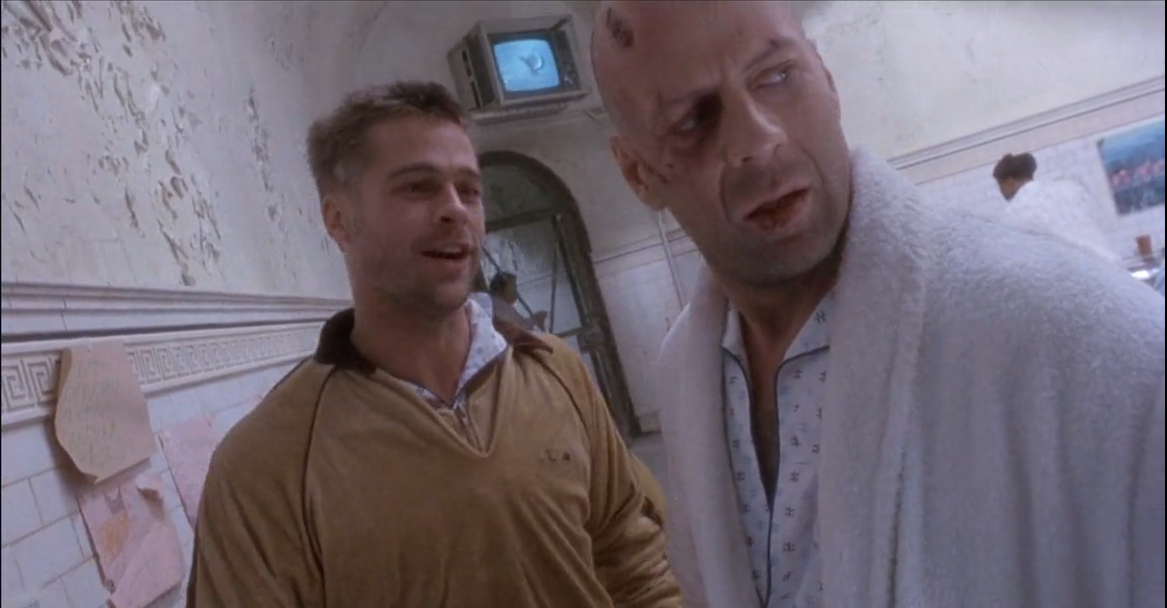
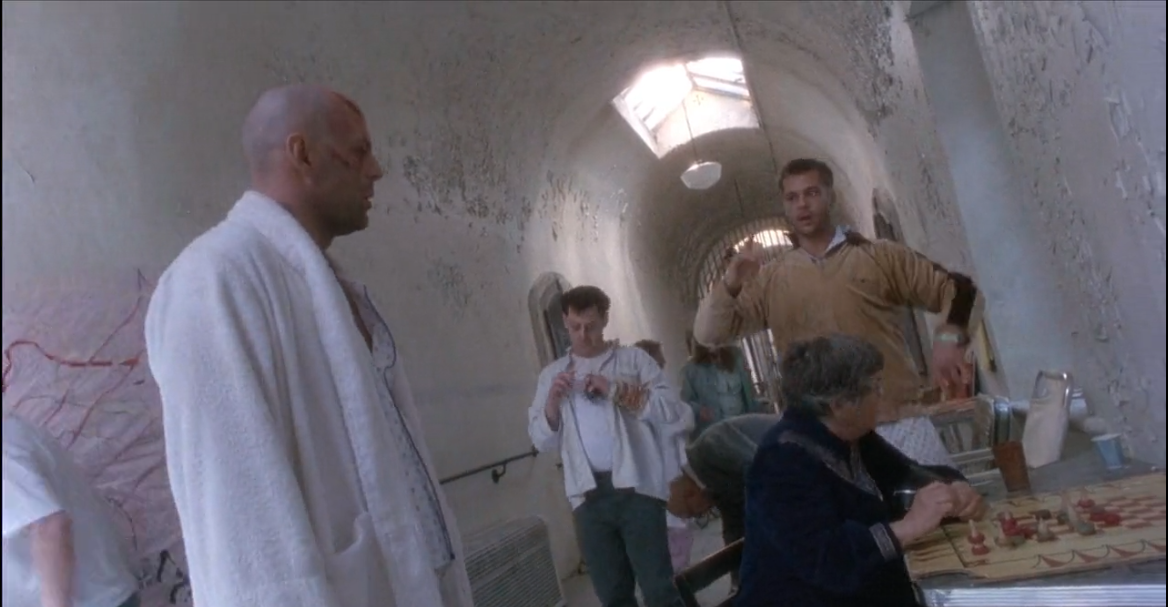
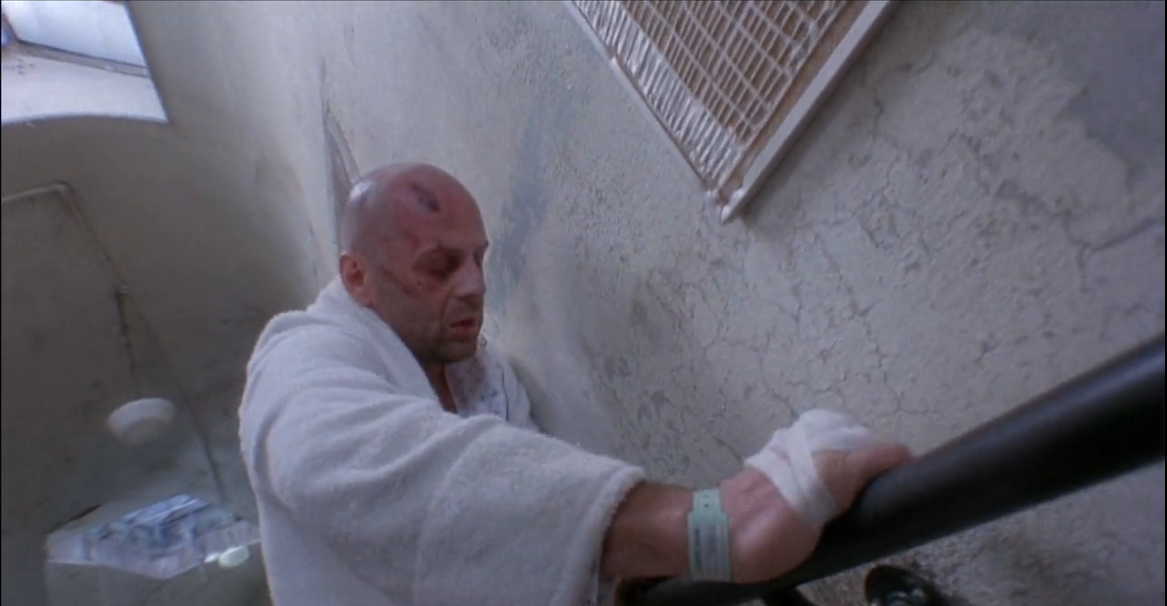
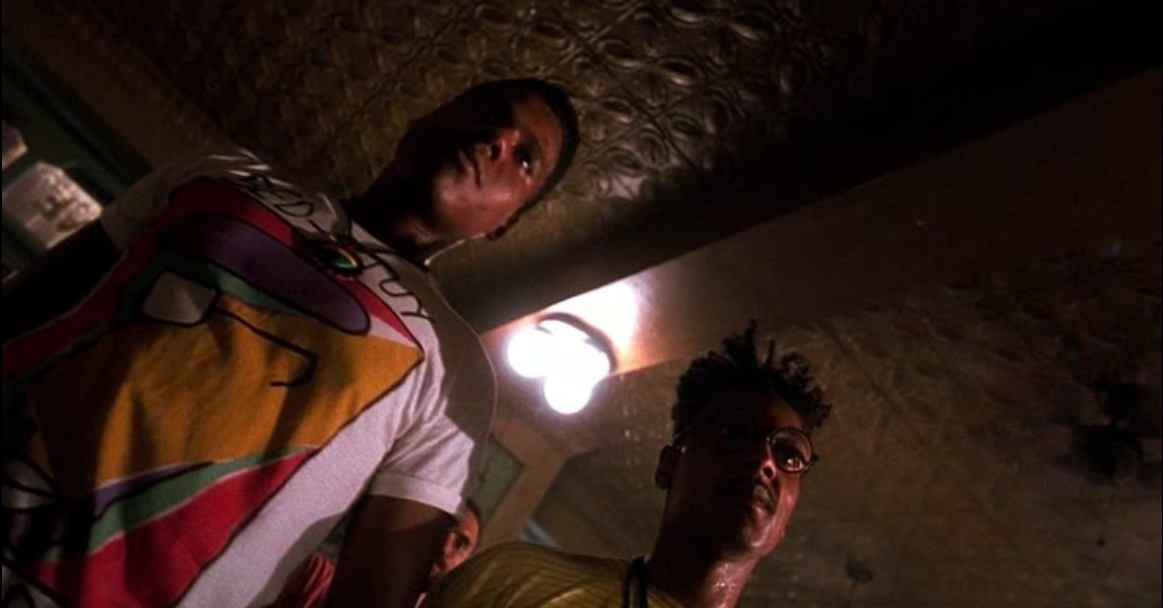
Canted shots are composed with a camera tilted laterally with the horizon in a non-straight line, while vertical lines run diagonally across the frame. These compositions create spatial imbalance and disorientation. They convey confusion, insanity, psychological instability, drug induced psychosis, and dramatic tension. Canted shots are mainly used to showcase a character’s abnormal state of mind, but they can also be used to represent the whole psychology of a collective when facing a stressful or unusual situation. Another use of the canted shot is to convey that an abnormal or unnatural situation is happening without necessarily reflecting a character’s psychology. The bigger the degree to which the frame is canted (usually up to 45 degrees), the higher the abnormality and instability it reflects. However, some directors may use it for stylistic purposes without conveying anything, such as Tom Hooper in Les Misérables (2012), and Danny Boyle in Yesterday (2019).
Twelve Monkeys (1995), directed by Terry Gilliam. The extensive use of canted shots in the scenes in which the central character of the story, James Cole (played by Bruce Willis), is in the mental institution create an unsettling and disturbing atmosphere, evoking insanity and chaos. When Cole tries to escape, he is framed in canted shots to showcase his disorientation caused by the drugs he was given by the doctors.
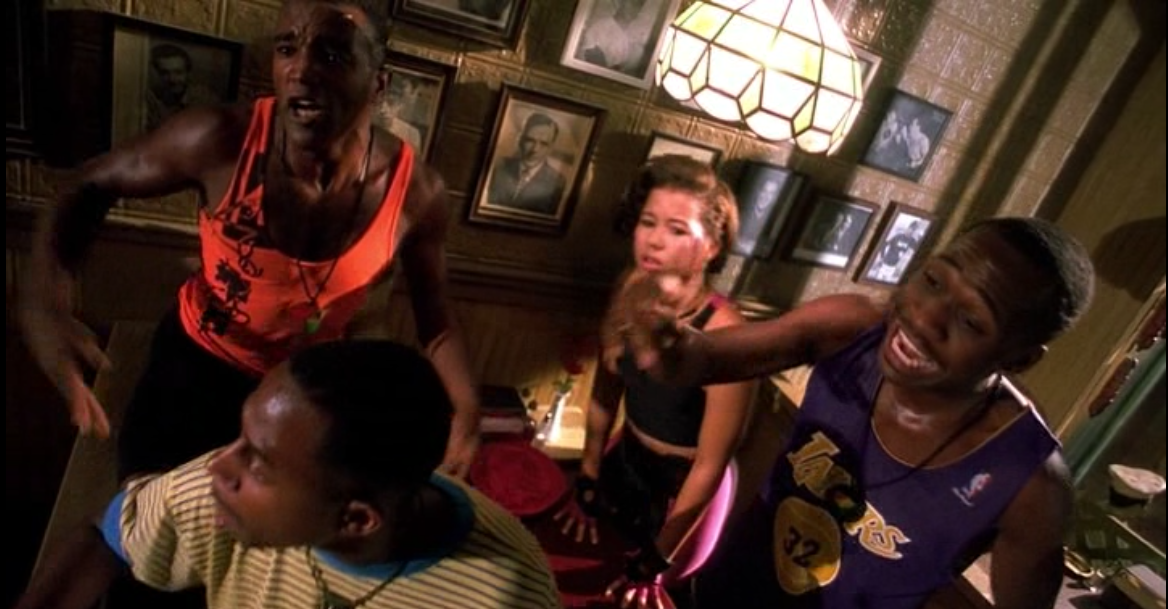
Do the Right Thing (1989), directed by Spike Lee. The film takes place during the hottest day of the year in a neighbourhood in Brooklyn. The viewers observe the characters trying to endure the heat, with the situation eventually igniting an explosion of violence and aggression by the end of the film. Throughout the film, the use of canted shots convey the instability and suppressed aggression of the characters. By the end of the film, there is a broad use of canted shots that photograph the characters’ violent behaviour, leading to a full scale riot and destruction of the local pizzeria, illustrating the unnatural and chaotic nature of the characters’ acts.
Camera angles are significant to build an appropriate image system for a film, but the image system should always be designed based on the central themes of the story. Extreme-angle shots should be utilised in films in a balanced way, otherwise the viewer becomes disorientated, and the film itself may look ‘gimmicky’.
Bibliography
MERCADO, G., 2010. The filmmaker’s Eye: Learning (and breaking) the rules of cinematic composition. Routledge.
PRAMAGIORRE, M., & WALLIS, T., 2008. Film: A critical introduction. Laurence King.


 chk Ithaca Studio